India’s Vibrant Festivals: A Journey Through Color, Tradition, and Spirituality

India is a land of diversity, and its festivals are a testament to the country’s rich cultural, religious, and spiritual fabric. From the exuberant celebrations of Diwali to the heartfelt observances of Eid, Indian festivals are an explosion of colors, emotions, and traditions that bind communities together. Each festival is not just a day of celebration but a reflection of India’s deep spiritual values and centuries-old customs.
In this blog, we’ll take a journey through some of India’s most vibrant festivals, exploring the colorful parades, rich traditions, and spiritual significance that make each celebration a unique experience.
1. Diwali – The Festival of Lights
Diwali, also known as Deepavali, is undoubtedly one of the most celebrated festivals in India. It symbolizes the victory of light over darkness and good over evil. The festival marks the return of Lord Rama to his kingdom after 14 years of exile, as described in the ancient Hindu epic, the Ramayana.
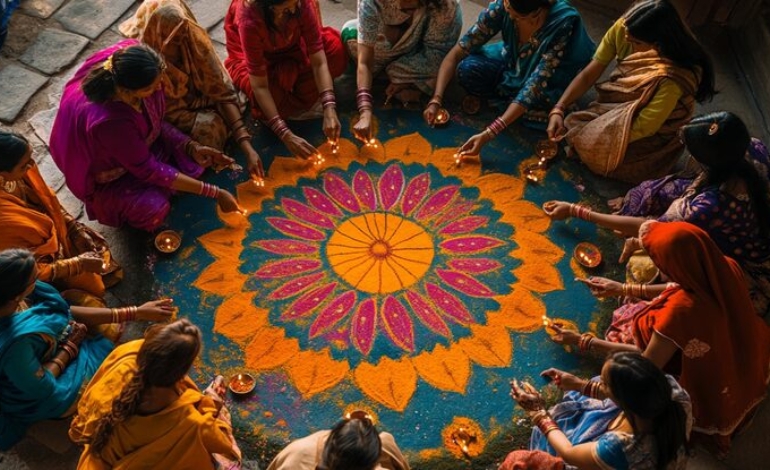
Homes across the country are adorned with colorful rangolis, flickering diyas (oil lamps), and intricate decorations. Fireworks light up the night sky, and the air is filled with the scent of sweets and incense. Diwali is not just a celebration of lights, but also a time for family reunions, exchange of gifts, and offering prayers to Goddess Lakshmi, the goddess of wealth and prosperity.
2. Holi – The Festival of Colors
Holi is perhaps the most colorful festival in India, celebrated with great enthusiasm and joy. It marks the arrival of spring and is also associated with the legend of Prahlad and Holika, which symbolizes the victory of good over evil. The most striking feature of Holi is the throwing of colored powders, with people of all ages dousing each other in vibrant hues, celebrating the spirit of togetherness and equality.
While the playful chaos of Holi is famous worldwide, the festival is also a time for spiritual reflection and prayer, especially in regions where it is closely associated with the love of Radha and Krishna. Holi is a celebration of the triumph of love, unity, and the joy of life.
3. Durga Puja – A Tribute to Goddess Durga
Durga Puja, primarily celebrated in West Bengal, is a grand festival that honors Goddess Durga’s victory over the buffalo demon Mahishasura. The festival spans several days, with beautifully crafted idols of Goddess Durga being placed in elaborate pandals (temporary structures) across the region.
The grand processions, traditional dance performances, and the immersion of the idols into rivers mark the end of the festival. Durga Puja is a time for people to come together in devotion, reflect on the power of femininity, and celebrate victory through prayer, art, and culture.
4. Navratri – The Nine Nights of Devotion
Navratri is a festival dedicated to Goddess Durga and her many forms, celebrated over nine nights and ten days. The festival symbolizes the battle between the goddess and the demon Mahishasura and is a time for reflection, fasting, and prayer.
In Gujarat, the festival takes on a unique character with the traditional dance form of Garba, where people gather in large circles, moving in sync to rhythmic beats. The energy, joy, and devotion exhibited during these nine nights make Navratri one of the most spiritually uplifting festivals in India.
5. Eid al-Fitr – Celebrating the End of Ramadan
Eid al-Fitr marks the end of the holy month of Ramadan, a time when Muslims fast from dawn to dusk in devotion to Allah. The festival begins with a special prayer at the mosque, followed by celebrations with family and friends.
The air is filled with the aroma of special dishes like biryani, kebabs, and sweets such as seviyan (sweet vermicelli). Eid is a time for sharing with the less fortunate, as giving Zakat (charity) is an important part of the observance. The sense of community, gratitude, and spiritual renewal makes Eid a deeply meaningful festival.
6. Ganesh Chaturthi – The Birth of Lord Ganesha
Ganesh Chaturthi celebrates the birth of Lord Ganesha, the elephant-headed god of wisdom, prosperity, and remover of obstacles. The festival begins with the installation of Ganesha idols in homes and public places, followed by prayers, dances, and songs.
The vibrant processions, where devotees carry the idols to the river for immersion, are an awe-inspiring sight. Ganesh Chaturthi is not just a celebration of the god but also a time for communities to come together, celebrate creativity, and reflect on spiritual values.
7. Onam – The Harvest Festival of Kerala
Onam is the biggest and most important festival in Kerala, celebrating the harvest and the return of the legendary King Mahabali. The festival is marked by intricate floral designs known as “Pookalam,” boat races, traditional dances (like Thiruvathira), and a sumptuous feast known as “Onam Sadya,” which includes a variety of vegetarian dishes.
Onam is a celebration of nature, prosperity, and community. It’s a time to give thanks for the harvest and celebrate the unity of families and communities in the beautiful state of Kerala.
8. Makar Sankranti – Welcoming the Sun God
Makar Sankranti is a festival that marks the transition of the sun into the zodiac sign of Capricorn. Celebrated across India in different forms, it’s most famous for the kite flying tradition in Gujarat and Rajasthan. The festival is also celebrated with bonfires, dancing, and special sweets made of sesame seeds and jaggery (tilgul).
Makar Sankranti is a celebration of new beginnings, harvest, and the victory of light over darkness, making it a culturally significant and joyous occasion in India.
9. Baisakhi – Harvest and New Beginnings
Baisakhi marks the start of the harvest season in India, particularly in Punjab, where farmers thank God for the abundant crops. It is also an important day for Sikhs, as it commemorates the formation of the Khalsa in 1699 by Guru Gobind Singh Ji. The festival is celebrated with processions, dancing, singing, and the traditional Bhangra dance.
Baisakhi is a celebration of nature’s bounty and a time to reflect on new beginnings, gratitude, and spiritual growth.
Conclusion
India’s festivals are a true reflection of its cultural diversity, traditions, and deep spirituality. These celebrations are more than just rituals; they bring communities together, bridge social gaps, and foster a sense of unity and love. Each festival, whether it’s the colorful explosion of Holi, the spiritual reflection of Diwali, or the community-centered joy of Eid, tells a unique story of India’s vibrant heritage. By experiencing these festivals, one not only witnesses the country’s rich culture but also becomes part of a journey that celebrates life, love, and spirituality.