Exploring India’s Most Celebrated Religious Festivals

India, a land of diverse cultures, languages, and traditions, is also home to a myriad of religious festivals that are celebrated with great enthusiasm across the country. These festivals, rooted in centuries-old traditions, are not just a display of faith but also a celebration of life, community, and heritage. Whether it’s the colorful festival of Holi, the spiritual depth of Diwali, or the grandeur of Eid, India’s religious festivals offer a glimpse into the country’s rich spiritual fabric. In this blog, we’ll explore some of the most celebrated religious festivals in India and the unique traditions associated with each.
1. Diwali – The Festival of Lights
One of the most widely celebrated religious festivals in India, Diwali marks the victory of light over darkness and good over evil. It is celebrated by millions of Hindus, Sikhs, Jains, and Buddhists across the country and is often considered the most important festival in the Hindu calendar.
- History and Significance: Diwali commemorates the return of Lord Rama to his kingdom of Ayodhya after defeating the demon king Ravana and returning from exile. It is also associated with the triumph of Lord Krishna over the demon Narakasura in some regions of India. For Sikhs, Diwali holds special significance as the day Guru Hargobind Ji was released from imprisonment.
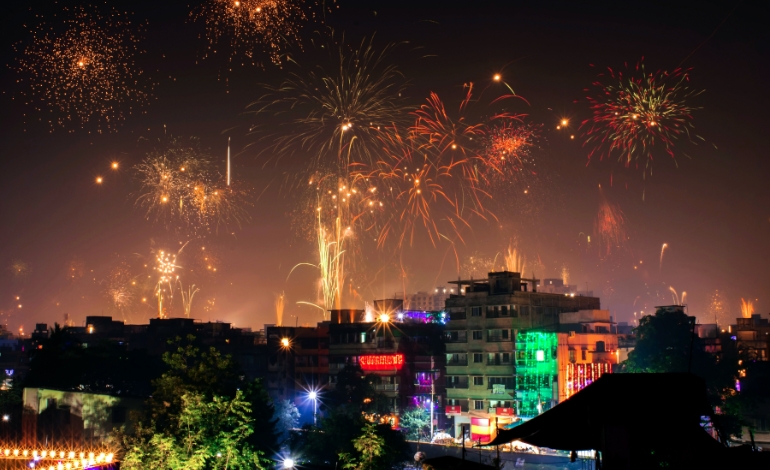
- Celebrations: The festival is marked by lighting oil lamps or diyas, bursting fireworks, exchanging gifts, and feasting on sweets. Temples and homes are beautifully decorated with rangoli (colored patterns on the ground) and lanterns. The prayers and rituals vary across regions but are united in their focus on peace, prosperity, and the removal of darkness.
2. Holi – The Festival of Colors
Holi, the festival of colors, is one of the most joyful and exuberant festivals in India. It signifies the arrival of spring, the victory of good over evil, and the renewal of love and friendship.
- History and Significance: Holi has its roots in Hindu mythology and is often associated with the story of Prahlad and Hiranyakashipu. According to the myth, Prahlad, a devout follower of Lord Vishnu, was saved from a fire set by his evil father, Hiranyakashipu. Holi celebrates this divine intervention, symbolizing the triumph of good over evil.
- Celebrations: Holi is celebrated with great zeal across India, especially in North India. On the eve of Holi, people light bonfires to signify the burning away of evil, known as Holika Dahan. The next day, people play with colored powders, dance to traditional music, and share sweets. The joyous atmosphere encourages social bonding and is a time for breaking societal barriers.
3. Eid al-Fitr – The Festival of Breaking the Fast
Eid al-Fitr, one of the two major festivals celebrated by Muslims in India, marks the end of Ramadan, the holy month of fasting. It is a time of gratitude, celebration, and sharing with the less fortunate.
- History and Significance: Eid al-Fitr is celebrated on the first day of Shawwal, the month following Ramadan. The festival celebrates the conclusion of a month of fasting, prayer, and charity. It is a day for Muslims to come together, offer prayers in mosques, and share meals with family and friends.
- Celebrations: On Eid, Muslims dress in their finest clothes and attend special prayers at mosques or open fields. The day is marked by the giving of Zakat al-Fitr, a form of charity, to help the needy. The festivities include feasts, the giving of gifts, and sweet treats like sewaiyan (sweet vermicelli). Eid celebrations are a time for unity and togetherness.
4. Christmas – The Birth of Jesus Christ
Christmas is a major religious festival celebrated by Christians across India. It marks the birth of Jesus Christ and is a time for reflection, family gatherings, and charity.
- History and Significance: Christmas commemorates the birth of Jesus Christ in Bethlehem, as described in the New Testament of the Bible. For Christians, it is a time to celebrate the teachings of Jesus, focusing on love, kindness, and forgiveness.
- Celebrations: Christmas is celebrated with prayers, church services, feasts, and the exchange of gifts. In cities with significant Christian populations like Goa, Kerala, and Kolkata, the streets are lit with decorations, and churches are beautifully adorned with Christmas trees, lights, and nativity scenes. The midnight mass and Christmas morning services are central to the religious observance, followed by family gatherings and festive meals.
5. Ganesh Chaturthi – The Birth of Lord Ganesha
Ganesh Chaturthi is a major Hindu festival celebrating the birth of Lord Ganesha, the elephant-headed god of wisdom, prosperity, and remover of obstacles. It is especially popular in Maharashtra but is celebrated across India.
- History and Significance: The festival marks the birth of Ganesha, the son of Lord Shiva and Goddess Parvati. It is believed that Ganesha’s blessings bring prosperity, wisdom, and success. The festival also symbolizes the cycle of life and the concept of impermanence, as the idols of Ganesha are immersed in water at the end of the festival.
- Celebrations: People bring home beautifully crafted idols of Lord Ganesha and offer prayers, sweets (especially modaks, a favorite of Ganesha), and flowers. In cities like Mumbai, large-scale public celebrations take place, with gigantic idols of Ganesha displayed in pandals (temporary structures) and processions accompanied by music and dance. The immersion of the idols in water marks the end of the festival.
6. Durga Puja – The Worship of Goddess Durga
Durga Puja is one of the most significant Hindu festivals, particularly in the state of West Bengal, where it is celebrated with immense grandeur. It honors Goddess Durga, who symbolizes strength and the triumph of good over evil.
- History and Significance: Durga Puja commemorates the victory of Goddess Durga over the buffalo demon Mahishasura. According to Hindu mythology, Durga was created by the gods to defeat Mahishasura, who had terrorized the heavens. The festival celebrates the goddess’s victory and is a time for prayers, rituals, and cultural performances.
- Celebrations: The festival lasts for several days, with elaborate preparations for the installation of Durga idols in pandals. The streets come alive with music, dance, and traditional performances like dhunuchi dance and sindur khela (a ritual where women apply vermillion on each other). The immersion of the Durga idol in water symbolizes the goddess’s return to her celestial abode.
7. Janmashtami – The Birth of Lord Krishna
Janmashtami is the celebration of the birth of Lord Krishna, one of the most revered deities in Hinduism. The festival is celebrated with great fervor, especially in Mathura and Vrindavan, the birthplace of Lord Krishna.
- History and Significance: Janmashtami marks the birth of Lord Krishna, who is believed to have incarnated to destroy evil and restore righteousness. The festival is a celebration of Krishna’s divine childhood and his teachings of love and devotion.
- Celebrations: Devotees fast, sing devotional songs, and perform dahi handi (a traditional game where teams form human pyramids to break a pot filled with yogurt). Temples are decorated with flowers, and the night of Janmashtami is filled with midnight prayers and bhajans (devotional songs).
Conclusion: A Celebration of Faith and Unity
India’s religious festivals are not just about rituals and traditions; they represent the diversity, unity, and vibrancy of the country. Each festival, whether it’s the jubilant celebration of Holi or the reflective prayers during Ramadan, brings people together, transcending regional and cultural differences. These festivals are a testament to the spiritual and cultural richness of India, making the country a unique destination for travelers seeking to understand its deep-rooted traditions. Whether you are a devotee, a cultural enthusiast, or a traveler, experiencing these festivals will give you an insight into the heart of India’s soul.